Testing and documentation
Every lot is tested. The certificate comes with it.
Full panel, every production lot, at an independent laboratory. The certificate of analysis for the lot you receive is issued with your order — the lab’s own document, not a summary we typed up.
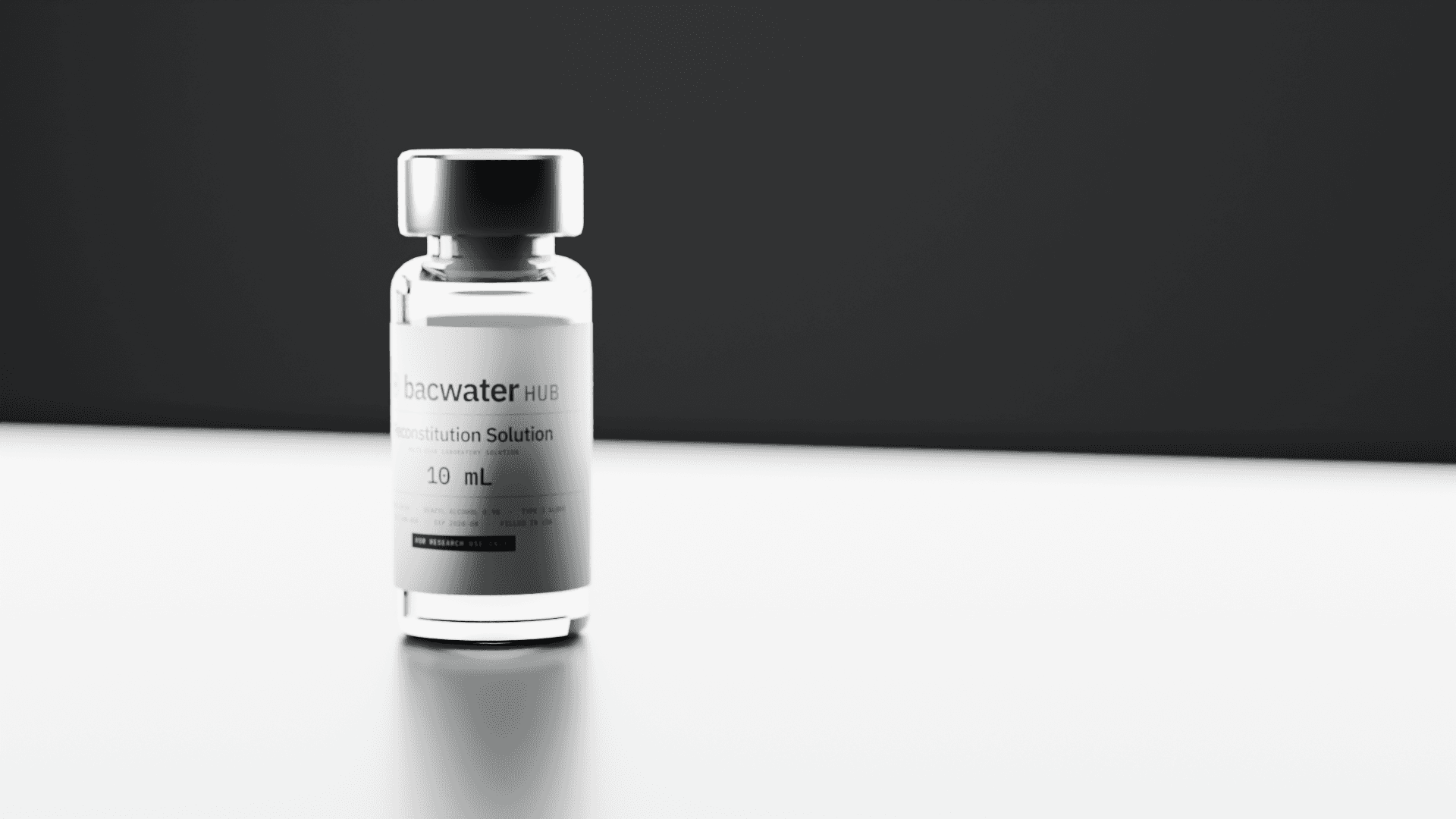
The panel
The panel every production lot is run against:
| Test | Reported as |
|---|---|
| Sterility | Pass or fail, with the test date |
| Bacterial endotoxin | Measured value, with the test date |
| Benzyl alcohol concentration | Measured value against a target of 0.9% |
| pH | Measured value, with the test date |
| Appearance | Clear, colourless, free of visible particulate |
Every test on this panel is run by an independent laboratory — not in house, and not by us. The results for your lot, with the method and the date of each test, are on the certificate issued with your order.
Why the results aren’t on this page
A certificate of analysis is a document about one lot. Published openly, it stops being that: a panel with our lot code on it can be lifted, attached to vials we never filled, and shown to a buyer as proof of something we had no part in.
That costs us a reputation we can’t audit and costs the person holding the counterfeit a product they think has been tested. Neither of them finds out. So the certificate goes to the person who bought the lot it describes, which is who it was written for.
What stays public is everything you can hold us to before you buy: the full specification, the panel above, and the warranty and remedy if a lot doesn’t conform to it. If a lot arrives outside its specification, the remedy is written down rather than discretionary.
How we phrase results, and why
We write test results in the past tense, tied to a named lot: Lot 2608-A14 was tested for sterility, endotoxin and preservative concentration on 12 August 2026. (An illustration of the wording, not a published result.)
We don’t write “every vial is guaranteed sterile.” A test is evidence about the lot that was tested, on the day it was tested. Anything phrased as a forward promise about lots that don’t exist yet is marketing, not data — and in a category where the product is chemically identical across every supplier, the phrasing is most of what distinguishes them.
Container and closure
Type I borosilicate glass, bromobutyl rubber stopper, aluminium crimp seal, tamper evident. Glass and crimp are not a preference — a plastic container or a screw closure on a multi-dose reagent is the clearest signal you’re not looking at the product you think you are.
Testing questions
What is measured, who measures it, and what a result does and does not entitle us to claim.
Does bacteriostatic water get tested differently from reconstitution solution?
The question conflates a regulatory identity with a test panel. An approved drug product is tested to the standard its approval requires, by the party holding that approval. That standard is not something a supplier of a research reagent can adopt by choosing a name.
What we can tell you is what we do: the panel below, run per lot at an independent laboratory, reported with the result and the date on the certificate issued with the order. Why the two names are not interchangeable covers the distinction in full.
Is a certificate of analysis included, and do I have to ask for it?
Included, and you don’t have to ask. The COA for the lot you receive is issued with your order — the laboratory’s own document, carrying the panel, the methods, the results and the date of each test.
It is not published on this site, and that is deliberate rather than an omission. A certificate with our lot code on it, sitting on a public page, can be attached to vials we never filled and shown to a buyer as evidence. The certificate goes to the person who bought the lot it describes.
What is a COA, and what does yours contain?
A certificate of analysis is the laboratory’s own document for a single lot: the tests run, the methods used, the results and the dates.
You get the document itself rather than a summary we typed out. The difference matters — a summary is a supplier’s account of a test, and a COA is the laboratory’s. It is tied to the lot code printed on your carton, so the certificate and the vials in front of you refer to the same production run.
Who runs the testing, and why don’t you name the laboratory?
An independent laboratory. We do not publish its name.
A lab name is not a result. It is not something a buyer can independently verify, and publishing it creates pressure on a third party who did not agree to be part of our marketing. What carries information is the measured result, the date it was measured and the lot code it belongs to — all three on the certificate that comes with your order, on the laboratory’s own letterhead.
Is the 0.9% benzyl alcohol a formulation target, or is it measured?
Both. 0.9% is the formulation target, and benzyl alcohol concentration is measured per lot and reported as a measured value against that target.
Reported as a number rather than as “conforms,” which is the more common phrasing and tells you strictly less. The preservative is the entire reason this is a multi-dose presentation rather than a single-use one, so it is the specification least worth taking on trust. The full specification.
Do you guarantee that every vial is sterile?
No, and a supplier who does is claiming something a test cannot support.
A sterility test is evidence about the lot that was tested, on the day it was tested. We state results as what a named lot was tested for and what was found, in the past tense, and we make no claim about lots that have not been filled or tested. What we do warrant is narrower and checkable: that at dispatch the product conforms to the specification published for its fill size and to the test results published for its lot. What we warrant, and your remedy.
Where is it filled, and why won’t you say more than that?
Our US facility. We describe it that way deliberately and do not name or locate it further.
Naming a fill site publicly creates problems for the site and gives a buyer nothing they can verify — you cannot audit a name on a web page. What you can hold us to is the published specification, the panel every lot is run against, and the certificate that arrives with your order. More on that policy, and who operates the business.
Can I get documentation for a lot I have already received?
Yes. Send us the lot code from your carton and we will reissue the certificate for it.
We keep lot records after a lot sells through, so a lot bought years ago can still be documented for as long as anyone needs to file the paperwork. Ask us and we will get it to you.
For research use only. Not for human or veterinary use. Not a drug, supplement or medical device.